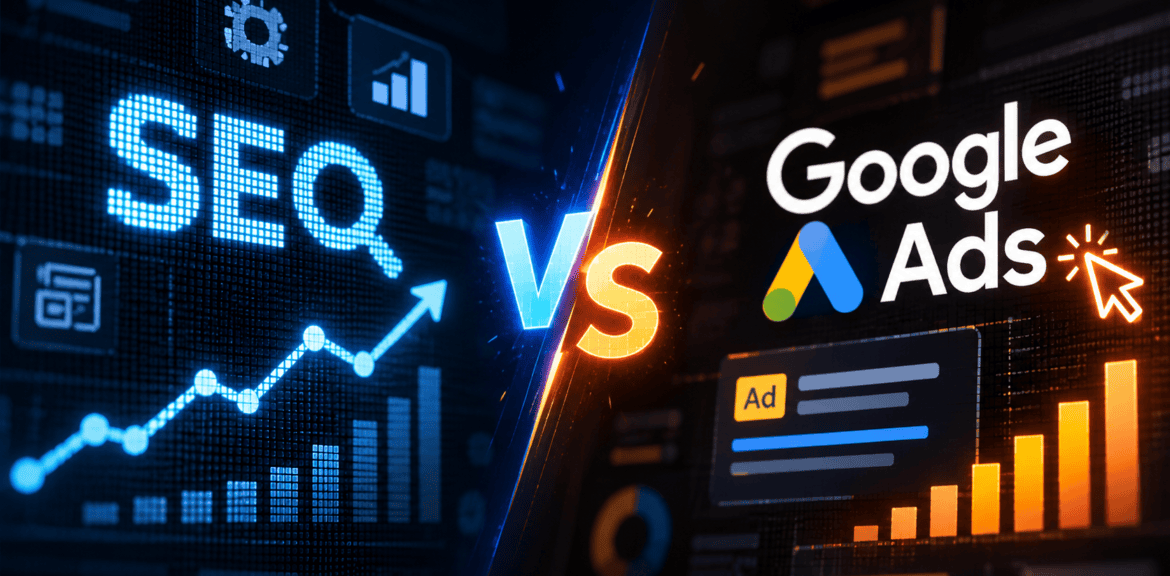

SEO vs Google Ads: Which Is Better for Your Business?
In today’s competitive digital market, businesses need an effective strategy to attract customers, generate leads, and increase sales. Two of the most popular ways to achieve these goals are Search Engine Optimization (SEO) and Google Ads. But which one is better for your business?
The answer depends on your marketing goals, budget, competition, and how quickly you want to see results. SEO helps build long-term organic visibility, while Google Ads can bring targeted traffic through paid advertising.
In this guide, we will compare SEO vs Google Ads, explain their benefits, and help you choose the right digital marketing strategy for your business.
What Is SEO?
Search Engine Optimization (SEO) is the process of improving your website to increase its visibility in unpaid search engine results. It involves optimizing website content, improving technical performance, researching keywords, and earning relevant backlinks.
For example, if someone searches for digital marketing near me, an SEO-optimized website may appear in organic search results if it is relevant to the query and competitive for that search.
SEO includes three major areas:
- On-page SEO: Optimizing title tags, meta descriptions, headings, content, images, and internal links.
- Technical SEO: Improving website speed, mobile usability, crawlability, indexing, and site structure.
- Off-page SEO: Building website authority through relevant backlinks, brand mentions, and other external signals.
Businesses can also invest in local SEO to improve their visibility in location-based searches and Google Maps.
What Is Google Ads?
Google Ads is a paid advertising platform that allows businesses to display advertisements when potential customers search for relevant products or services. Businesses can also run campaigns across eligible partner websites, apps, and other Google advertising placements.
For example, a company offering SEO services in Delhi can run Google Ads for searches related to SEO agencies, digital marketing services, or website optimization.
Google Ads offers several campaign types, including:
- Search Ads: Text advertisements displayed alongside relevant search results.
- Display Ads: Visual advertisements shown across eligible websites and apps.
- Shopping Ads: Product advertisements for eligible ecommerce businesses.
- Performance Max: Campaigns designed to reach customers across Google’s advertising channels.
- YouTube Ads: Video advertisements that help businesses reach relevant audiences.
Google Ads can generate traffic quickly after a campaign becomes eligible to serve, but results depend on targeting, competition, budget, landing page quality, and campaign setup.

SEO vs Google Ads: Key Differences
| Comparison factor | SEO | Google Ads |
|---|---|---|
| Cost model | Investment in optimization and content | Advertising spend, often charged per click |
| Time to results | Usually takes time to build visibility | Can generate traffic soon after launch |
| Traffic source | Organic search results | Paid placements |
| Long-term value | Can build lasting organic traffic | Traffic generally declines when ads stop |
| Budget control | Work is prioritized over time | Budgets and bids can be adjusted |
| Brand trust | Organic visibility can build credibility | Ads provide prominent paid visibility |
| Best for | Sustainable traffic and long-term growth | Immediate reach and lead generation |
| Measurement | Rankings, organic clicks, leads, conversions | Clicks, cost per lead, conversions, ROAS |
Neither strategy guarantees sales. Both require relevant targeting, useful content, and a website that converts visitors into customers.
Benefits of SEO for Your Business
1. Builds Long-Term Organic Traffic
SEO helps your website appear for relevant search queries without paying for every organic click. A well-optimized page can attract potential customers over an extended period, although rankings and traffic can change with competition and search engine updates.
2. Improves Website Credibility
Many customers research businesses before making a purchase. Helpful content, clear service information, relevant backlinks, and a technically sound website can support credibility and improve the user experience.
3. Supports Local Business Growth
Local SEO is particularly useful for service providers, agencies, retailers, and other businesses that serve specific locations.
For example, businesses targeting searches such as “digital marketing near me” can optimize their website content, business details, and Google Business Profile to improve their local search presence.
Professional GMB services can include profile optimization, category selection, service descriptions, review management, and accurate business information. These activities can help a business become more relevant to local searches, but rankings are not guaranteed.
4. Helps Attract High-Intent Customers
Keyword research allows businesses to identify searches related to their products and services. By creating useful service pages and informative blog posts, you can reach people at different stages of the buying journey.
For example, an ecommerce company may benefit from targeting searches related to the best ecommerce SEO services in India.
5. Creates Opportunities for Sustainable Growth
SEO involves ongoing work, including content updates, technical improvements, and authority building. While it requires time and resources, strong organic visibility can reduce dependence on paid advertising for some customer acquisition activities.
Benefits of Google Ads for Your Business
1. Faster Visibility
Google Ads can put your business in front of relevant searchers soon after a campaign is approved and begins serving. This makes it useful for new businesses, product launches, seasonal offers, and companies that need enquiries quickly.
2. Targeted Advertising
You can tailor campaigns using factors such as keywords, geographic areas, audiences, devices, and campaign settings. For example, a Facebook ad agency near you may use Google Search Ads to reach businesses actively looking for advertising services.
3. Budget Flexibility
Google Ads allows you to set and adjust campaign budgets. However, you should monitor spending carefully because clicks do not always turn into qualified leads or sales.
4. Measurable Performance
You can track impressions, clicks, advertising costs, conversions, cost per lead, and return on ad spend where suitable conversion tracking is configured.
This data helps you identify which keywords, advertisements, and landing pages contribute to your business goals.
5. Useful for Testing Offers
Google Ads can help you test service offers, landing pages, and commercial keywords before investing heavily in long-term content development. Search term and conversion data can also inform your SEO strategy.
SEO vs Google Ads: Which Is Better for Small Businesses?
The right choice depends on what your business needs most.
SEO if:
- You want to build organic traffic over the long term.
- You want to improve website visibility for relevant search queries.
- You are investing in content marketing and brand authority.
- You want to strengthen local visibility through local SEO and Google Business Profile optimization.
- You can consistently invest time and resources without expecting immediate results.
Google Ads if:
- You need enquiries or sales quickly.
- You are launching a new service or product.
- You want to test keywords and offers.
- You have a clearly defined advertising budget.
- You can measure conversions and optimize campaigns based on performance.
Choose both if: You need short-term lead generation while building sustainable organic visibility. This combination can help balance immediate business needs with future growth.
SEO vs Google Ads for Ecommerce Businesses
Ecommerce businesses can benefit from both SEO and paid advertising, but each strategy serves a different purpose.
SEO helps product pages, category pages, buying guides, and informative content appear in organic search results. Google Ads can promote eligible products through Shopping Ads and reach customers searching for specific items.
An ecommerce SEO strategy should include:
- Optimizing product titles and descriptions.
- Improving category page content and navigation.
- Fixing technical SEO issues and broken links.
- Improving mobile usability and page performance.
- Creating helpful buying guides and product comparisons.
- Earning relevant, high-quality backlinks.
Businesses looking for the best ecommerce SEO services in India should prioritize providers that understand technical optimization, product page SEO, keyword research, and ecommerce conversion tracking.
Paid advertising can complement these efforts by promoting products while organic visibility develops.
Why Technical SEO and On-Page SEO Matter
SEO is not limited to adding keywords to website content. Your website also needs to be accessible to search engines and easy for visitors to use.
On-page SEO vs technical SEO: On-page SEO focuses on the content and HTML elements of individual pages, including titles, headings, descriptions, and internal links. Technical SEO focuses on areas such as crawling, indexing, site architecture, redirects, mobile usability, and performance.
Both are important. Excellent content may struggle to perform if search engines cannot properly access or index it, while a technically sound website still needs useful, relevant content to attract visitors.
Businesses should address both areas as part of a complete SEO strategy.
Are SEO Backlink Sites Important?
Backlinks are links from other websites pointing to your website. Relevant, editorially earned links can help search engines discover pages and provide useful signals about a site’s authority.
However, not all backlinks are valuable. Buying large numbers of low-quality links or using manipulative link schemes can create SEO risks.
Instead of searching only for SEO backlink sites, focus on earning links through:
- Useful industry articles and research.
- Genuine business partnerships.
- Relevant digital PR opportunities.
- Original guides and resources.
- Legitimate industry directories where appropriate.
Quality, relevance, and natural acquisition are more important than simply increasing the number of backlinks.
How to Choose the Right Strategy for Your Business
Before investing in SEO or Google Ads, ask yourself these questions:
- What is your primary goal? Decide whether you want leads, sales, brand awareness, or long-term organic growth.
- How quickly do you need results? Paid advertising may be useful for immediate visibility, while SEO requires consistent work over time.
- Who is your target audience? Research the keywords, locations, and services your potential customers are searching for.
- Can your website convert visitors? Make sure your website has clear service information, useful content, strong calls to action, and a simple enquiry process.
- How will you measure success? Track qualified leads, sales, conversion rates, customer acquisition costs, and return on investment.
For local businesses, combining a well-optimized Google Business Profile with website SEO can support local discovery. Businesses can also use paid campaigns to target relevant searches while organic rankings develop.
Common Mistakes to Avoid
Whether you choose SEO, Google Ads, or both, avoid these mistakes:
- Expecting SEO to produce immediate results.
- Running ads without conversion tracking.
- Targeting keywords that are unrelated to your services.
- Sending paid traffic to irrelevant landing pages.
- Building low-quality backlinks just to increase link counts.
- Ignoring technical SEO issues.
- Measuring success through clicks alone rather than qualified leads and sales.
A successful digital marketing strategy should focus on attracting the right audience and turning relevant traffic into measurable business outcomes.
Frequently Asked Questions
1. Is SEO better than Google Ads?
SEO is generally better suited to building long-term organic visibility, while Google Ads is useful for faster paid exposure. The best option depends on your goals, competition, budget, and timeline.
2. How long does SEO take to show results?
SEO timelines vary depending on website history, competition, technical issues, content quality, and the keywords targeted. Meaningful improvements can take several months, and competitive markets may require longer.
3. Can I run SEO and Google Ads together?
Yes. SEO can build organic visibility over time while Google Ads provides paid exposure. Using both allows you to pursue short-term and long-term marketing goals simultaneously.
4. Is Google Ads suitable for a new business?
Yes. Google Ads can help a new business reach relevant customers before it establishes organic rankings. Start with a realistic budget, relevant keywords, effective landing pages, and reliable conversion tracking.
5. Does Google Ads improve organic SEO rankings?
No. Paying for Google Ads does not directly improve your website’s organic rankings. SEO and paid advertising operate as separate channels.
6. What is better for local businesses: SEO or Google Ads?
Local SEO and Google Business Profile optimization can support ongoing local visibility. Google Ads can help generate faster paid exposure. Businesses with sufficient resources may benefit from combining both approaches.
Conclusion
When comparing SEO vs Google Ads, there is no single solution that works best for every business. SEO helps build long-term organic visibility, website authority, and sustainable traffic. Google Ads can deliver faster exposure and measurable paid traffic when campaigns are managed effectively.
For many businesses, the most practical strategy is to use Google Ads for immediate opportunities while investing in SEO for long-term growth. Review your business goals, available budget, and campaign performance regularly to determine the right balance.
Want to improve your website’s search visibility and generate more qualified leads? Invest in a digital marketing strategy that combines relevant content, technical SEO, local optimization, and performance tracking to support your business goals.