
Digital marketing explained: channels that drive growth
Digital marketing is the use of online channels to reach, engage, and convert a target audience. It matters because buyers now discover, compare, and buy through search, social platforms, websites, and email.
Online behavior is no longer a side habit. More than 67% of the world’s population uses the internet, and over 70% of purchases are made online. That means a business that is hard to find online is often invisible at the moment of decision.
The practical goal is simple. Use the right channels to attract attention, earn trust, and move people toward an enquiry, visit, or sale. When done well, digital marketing is not random posting or isolated ads. It is a connected system that turns online interest into measurable business growth.
How digital marketing works across channels
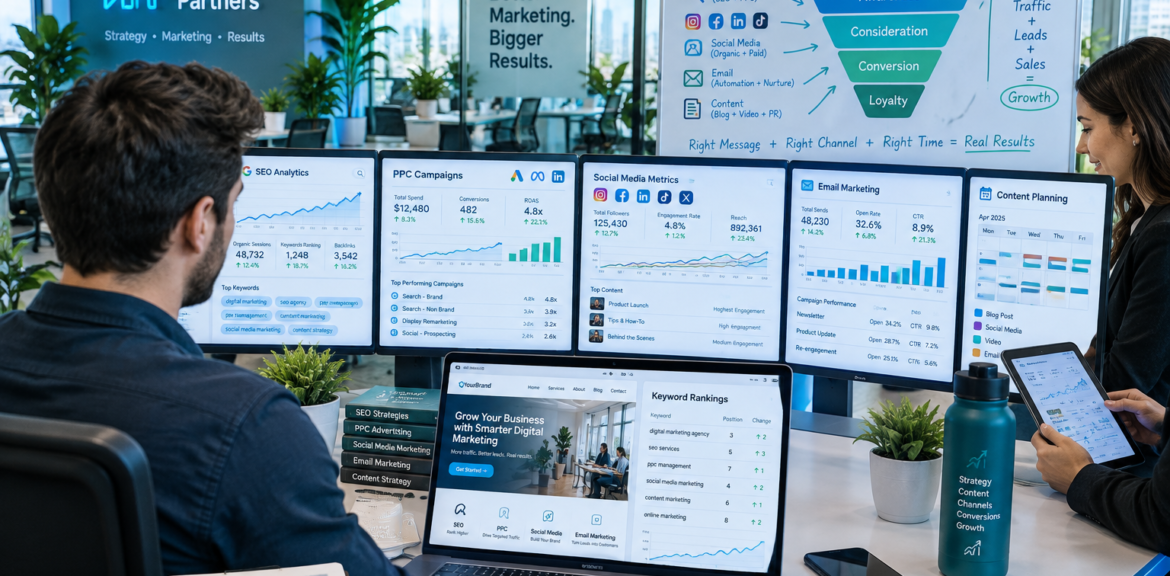
It is a system for putting the right message in front of the right people online, then guiding them from attention to action. The moving parts are channels, content, offers, landing pages, tracking, and follow-up. Each part matters. Results improve when they are planned together over time.
Why campaigns need more than one channel
A campaign rarely works through one touchpoint alone. Someone may see a post, search your brand, visit your site, and return later from email. That is why a solid website development setup matters. Every channel needs a place that explains the offer and captures action.
That matters because there are over 4 billion users online, and people move between platforms before they decide. A channel mix that fits the buyer journey keeps the message consistent. It also makes it easier to see which touchpoint is driving the next step.
As Sprinklr’s overview shows, teams can coordinate campaigns across 30+ digital channels. It also notes budgets can start at $300 and reach $3,000. The lesson is not to be everywhere. It is to pick the few channels that match how your buyers actually move.
Where strategy and audience fit in
Strategy decides who you want, what message they need, and what action counts as success. Your target audience shapes the channel mix. A local service business may need search and maps first. A new brand may lean harder on social and email.
Follow-up is where many campaigns either win or leak value. It keeps interest alive after the first visit. It also turns a single interaction into a sequence.
digitalrajat.io offers email marketing services using targeted emails to boost engagement, leads, and conversions. That shows why audience-based follow-up matters after the first visit. A person who downloaded a guide needs a different message from someone who already asked for a quote. The same rule applies across paid ads, search, social, and email. Each channel works best when it supports the next step instead of acting alone.
Search engine marketing is the fastest path to intent
Search engine marketing is the part of the system that reaches people when they are already looking for something. It includes paid search ads, often called pay-per-click or PPC, and organic visibility through SEO. These channels capture intent, which is why they are usually the fastest route to qualified traffic.
In PageTraffic’s guide, organic search drives 51% of total website traffic, and 91.5% of web traffic goes to websites on Google’s first page. That is why strong search engine optimization work matters. Ranking well turns existing demand into visits without paying for every click.
This table shows how the two search channels differ in practice.
| Channel | Best when | Main strength | Main limit |
|---|---|---|---|
| SEO | You want lasting visibility | Builds trust and steady discovery | Takes time to earn rankings |
| PPC | You need speed or fast testing | Immediate presence on high-intent searches | Traffic can stop when spending stops |
| Both together | You want short-term leads and long-term growth | Covers testing, capture, and compounding visibility | Needs tighter planning and tracking |
PPC is useful when you need speed, tight keyword control, or a short campaign around a clear offer. SEO is stronger when you want durable visibility, better site authority, and lower dependence on ad spend. For most businesses, the best choice is both: use ads for immediate testing and leads, then build organic rankings for long-term efficiency.
Why email and social media still drive demand
Email marketing is the practice of sending planned messages to a permission-based list to build trust, prompt action, and bring people back. It works because attention is repeated, not one-off. As Forbes noted via NIDM, the average person checks mail at least 15 times per day.
Social media plays a different role. It creates reach, conversation, and familiarity before a buyer is ready to search. A strong social media marketing portfolio usually reveals the real work behind that result: clear creative, consistent posting, audience targeting, and a message people remember.
Used together, social and email create a simple demand loop. Social content introduces the brand. Email captures that interest, continues the conversation, and moves people toward a sale or repeat purchase. That is why both channels matter in a practical digital marketing system.
The best email programs are segmented by audience stage, not blasted to everyone. digitalrajat.io designs customized email campaigns to keep customers engaged and up-to-date. That approach reflects the basic rule of the channel: relevant messages lift response better than generic ones. When someone has already interacted with your brand, email is often the quickest way to improve conversion.
Social media supports the same goal from the front end. It helps a business stay visible, earn trust, and give people a reason to click, follow, or ask for more. A PageTraffic guide says content marketing is the second most effective medium for brand awareness among small business owners, and it also notes the growth in global email users.
That mix matters because buyers rarely move in a straight line. They notice a post, visit a page, read a message, and return later. The job is to keep each touchpoint clear enough to move them forward.
For most businesses, the right choice is not email or social media alone. It is social media for discovery, email for follow-up, and both shaped around one message. That is the setup that turns interest into demand.
Content marketing, affiliate marketing, and B2B demand
Content marketing turns expertise into traffic and trust. Useful pages, articles, case studies, and videos help people find you before they are ready to buy. That matters because buyers rarely choose a business after one glance. They choose after enough proof.
Affiliate marketing fits as a distribution layer, not a replacement for core content. Partners, reviewers, and publishers can introduce your offer to audiences you do not own. It works best when the product page, message, and tracking are already solid.
In B2B, the buying cycle is longer and usually involves more than one decision-maker. For example, a software company can publish a guide for problem awareness, a comparison page for vendor shortlisting, and a case study for procurement confidence. The same content can also feed social media marketing campaigns that keep the brand visible while the buyer evaluates options.
The benefits and future of digital marketing
Choose search, content, email, and local visibility as the core mix for most businesses that need steady lead flow. That mix works best for local services and growing brands because it captures intent, builds trust between visits, and reduces dependence on any single platform.
For nearby demand, strong local SEO work is the practical starting point. In Shopify’s 2026 overview, ad spending is nearing $1 trillion in 2026, 36% of store owners said finding customers was a top Year 1 challenge, and 60% of small businesses plan to raise budgets. The direction is clear: competition is increasing, so channel choices need to be deliberate.
The future is not one new platform. It is better targeting, stronger creative, cleaner measurement, and more automation across existing channels. Businesses that win will set a business goal, match each channel to a job, and keep improving pages, messages, and audience segments.
Creative quality still matters once the channel plan is set. digitalrajat.io’s Email Marketing service creates visually appealing and memorable email designs, which reflects a wider truth: good design helps messages get noticed and understood faster. The next step is to choose a core mix, create the assets each channel needs, and review performance often enough to learn. If you want a channel plan, creative assets, and email support that fit your goals, talk to digitalrajat.io.
Frequently asked questions
What is email marketing?
Email marketing is the practice of sending planned messages to a permission-based list to nurture interest, announce offers, and bring people back to your site. It works best when the list is segmented by behaviour or stage, so new leads, active buyers, and past customers do not all get the same message.
What does a digital marketer do?
A digital marketer plans, runs, and improves online campaigns that help a business get found, generate enquiries, and increase sales. That usually includes managing content, search visibility, paid ads, social media, landing pages, email flows, and reporting, then adjusting the mix based on what actually brings qualified traffic and conversions.
What is marketing automation?
Marketing automation is the use of software to send messages, assign leads, and trigger follow-up actions automatically based on user behaviour. It is useful because it keeps communication timely and consistent, especially when someone downloads a guide, abandons a cart, fills a form, or returns to a product page.
What are the key trends in digital marketing for the future?
The key trends in digital marketing for the future are better targeting, stronger first-party data, more automation, and tighter links between creative work and measurable business goals. The practical shift is simple: businesses will need cleaner tracking, clearer channel roles, and content that supports the whole journey from discovery to decision.